Robert Bell's
Wines of Canada
Since 1992
Robert's Selections
Prohibition
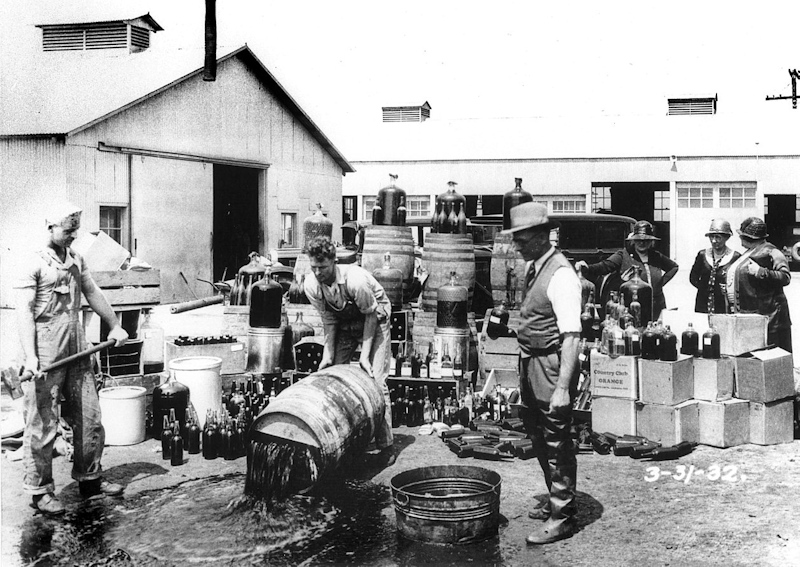
Prohibition was an attempt to forbid by law the selling and drinking of intoxicating beverages. It was enacted in Prince Edward Island in 1901 and in the remaining provinces, the Yukon, and Newfoundland during the First World War. The Canadian government controlled the making and trading of liquor and in March 1918 it stopped, for the duration of the war, its manufacture and importation into provinces where purchase was illegal. The zenith of prohibitionist success in Canada was reached in the early 1920s when imports from the outside were again cut off by provincial plebiscites.
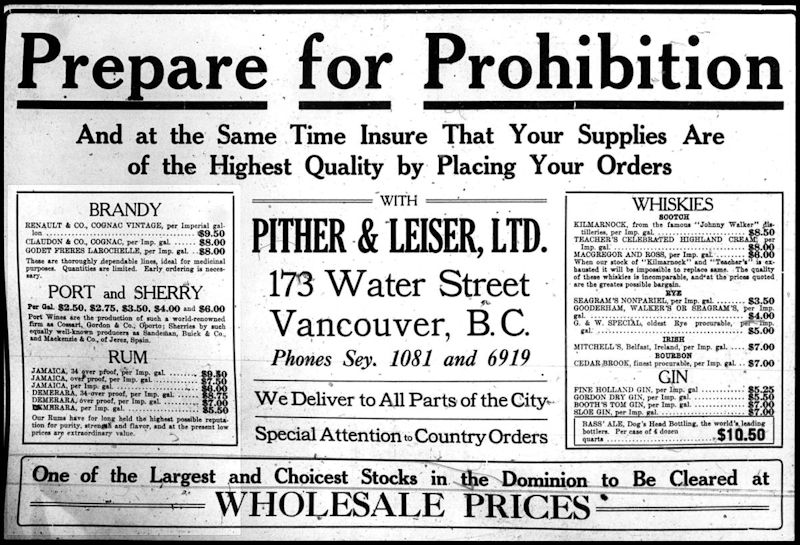
A newspaper ad in Vancouver prior to Prohibition
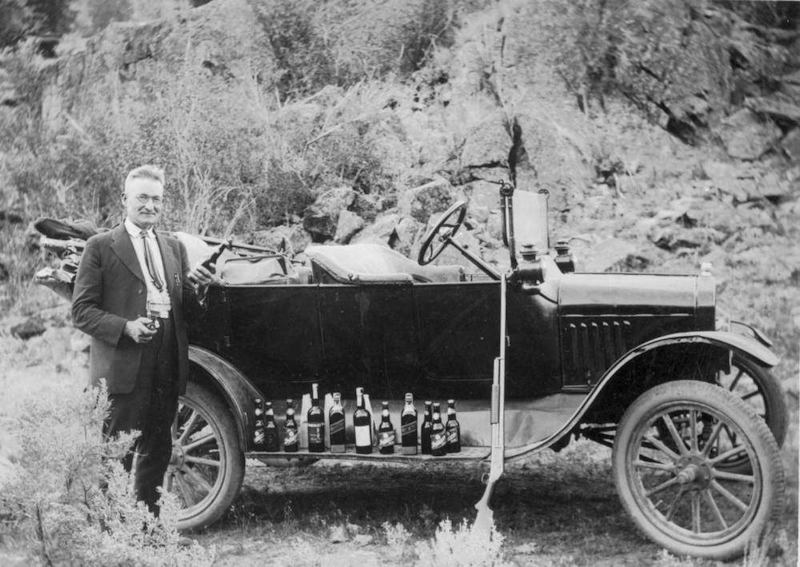
Photo shows a government prohibition agent with bottles of booze confiscated from a Kelowna bootlegger. Alcohol prohibition in BC lasted from 1917 to 1921. In BC it actually preceded prohibition in the US.
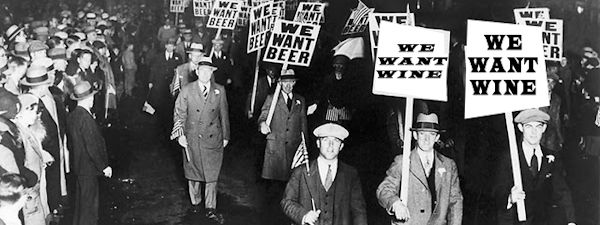
The Canada Temperance Act was an Act of the Parliament of Canada in 1878, which provided for an option for municipalities to opt-in by plebiscite to a prohibitionary scheme. It was often known as the Scott Act , on account of its sponsor Sir Richard William Scott .
The Act was based on similar provincial legislation known as the Dunkin Act, passed in 1864, which gave the power to communities to enact prohibition.
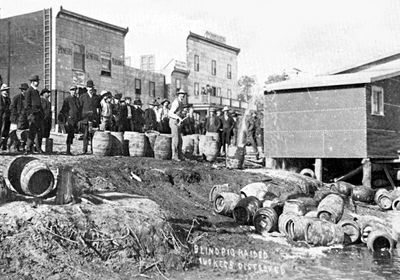
The Ontario Temperance Act of 1916 closed all bars and liquor stores
By 1982 the concerns were rising in the Ontario wine industry temperance societies were on the move. The public out cry against alcoholic beverages the idea of planting vineyards and pursuing efforts to improve Canada's wines was under great scrutiny. When war began the government had a need for industrial alcohol. By 1917 all provinces but Quebec were dry. Quebec held out until 1919 stopping hard liquor sales
When Ontario passed its Temperance act there were still ten wineries operating under Section 44 that stated that wines could be made from Ontario grown grapes by those wineries who held a permit from the Board of Licence Commissioners. Wine sales were restricted to on-site stores run by the winery and a consumer could buy only a five gallon quantity - 2 cases of wine. The federal law only prohibited the sale of wine not the actual manufacturing of it. Doctors could prescribe wine to patients. Churches could use wine for sacramental purposes, it could be purchased for industrial purposes.The Board of Licence Commissioners actually handed out 57 permits between 1917 and 1927, for a total of 67 wineries. These wineries were centered in the Niagara Peninsula, Toronto and Windsor. Niagara for its vineyards, Toronto for its population and Windsor as a gateway to USA.
Notable names at this time were The Twin City Wine Company, The Fort Williams Wine Company, Belleville Wine Company and Rabbi M. H. Levey.
Rabbi Levey made Kosher wines in Toronto He sold his licence in 1925 to the Canadian Wine Producers LTD.
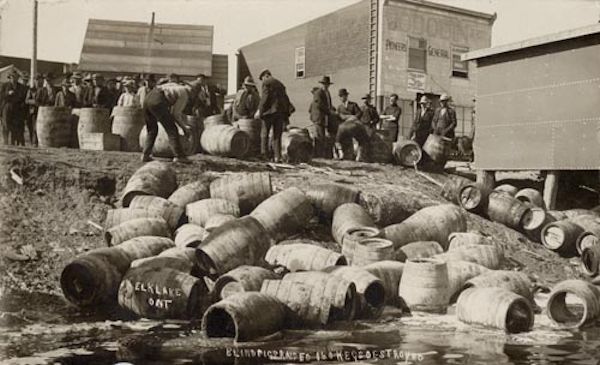
A liquor raid at Elk Lake, Ontario, 1925.
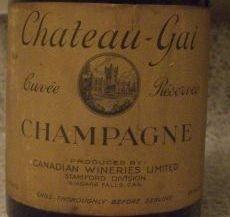
Another rabbi making wines for passover was Rabbi Jacob Gordon called Concord Wines he sold his licence to a medical wine producer called Oporto Wine Company. Who in time ended up as part of the Château-Gai winery in 1978.
The names you may remember were the ones who tried to and did produce some good drinkable wines in the prohibition years. There was Bright WInery, who introduced the first bottling line into Canada, Jordan Wines who had taken over Canadian Grape Producers Ltd in 1926 and London Winery who had obtained licenses from Giovanni Paproni and the Turner Wine Company. The Turner company was founded in Branfort in 1885 no doubt to compete with Major J.S. Hamilton. Their product was Turner Tonic Bitters.
Prohibition did not seem to have stopped the growth of the wine industry in Canada. It did change the names and slowed down progress, Prohibition was too short-lived for real success. Opponents maintained that it violated British traditions of individual liberty and that settling the matter by referendum or plebiscite was an aberration from Canadian parliamentary practice. Québec rejected it as early as 1919 and became known as the "sinkhole" of North America, but tourists flocked to "historic old Québec" and the provincial government reaped huge profits from the sale of booze.In 1920 BC voted "wet" and by the following year some alcoholic beverages were legally sold there and in the Yukon through government stores. Manitoba inaugurated a system of government sale and control in 1923, followed by Alberta and Saskatchewan in 1924, Newfoundland in 1925, Ontario and New Brunswick in 1927, and Nova Scotia in 1930. The last bastion, Prince Edward Island, finally gave up "the noble experiment" in 1948, though pockets of dryness under local option still exist throughout the land.
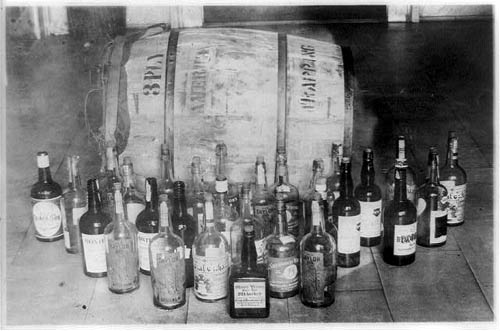
One problem the wineries had to overcome was finding bottles to put the wine in. It was not surprising in 1927 when the LCBO came about to see the same label on a variety of different shaped bottles. During the years 1920-21 it was estimated that Canadians drank 221,990 gallons of domestic wines In 1930 the figure was over 2 million gallons for Ontario alone. The wines of the day were mostly made with Concord grapes.
In 1921 the Growers' Wine Company of Victoria used loganberries and then labrusca grapes for wine production, becoming the first commercial winery in BC. Jesse Hughes, obtained vine cuttings from W.J. Wilcox, and plants over 200 acres by 1930, established the BC wine industry in earnest. The pioneers of viticulture in BC include the Dulik and Schmidt families as well as the Casorso and Rittich brothers.
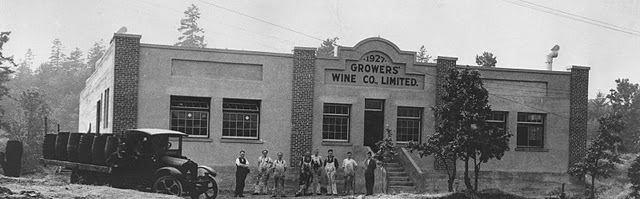
Growers Cider Company
The Growers Cider Company was established in 1927 in the District of Saanich, British Columbia, which is located in Victoria. The company motto back then was "What Western Canada Makes, Makes Western Canada." The first plant was built near the end of 1928 and was created as a means to showcase Canadian ciders and wines to the world. The Growers Cider Company was truly a Western Canadian Company, with more than 90 percent of the company owned by residents of the four western provinces.
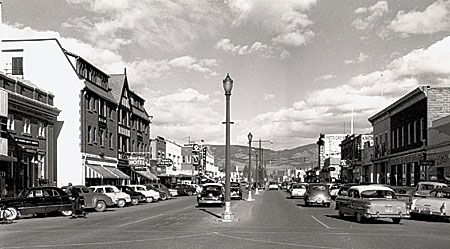
Kelowna Incorporated 1905
More indepth information the People, History and the Wineries
As the cost of living continues to rise our non-profit website would welcome a little support!
A small donation would be greatly appreciated.
Home | Sitemap | New |Advertise | Contact | History | Wineries | Terms| ©2016