Robert Bell's
Wines of Canada
Since 1992
Wine Drops
A page to put information thats has no where else to go!
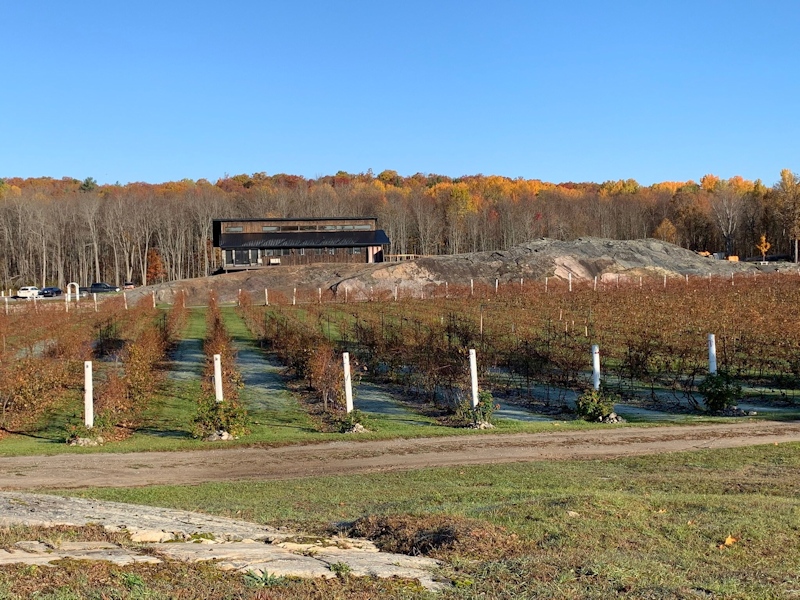
Potter's Settlement Vineyards
1445 Potter Settlement Rd, Tweed, ON
Bee TraditionThere was a time when almost every rural British family who kept bees followed a strange tradition.
Whenever there was a death in the family, someone had to go out to the hives and tell the bees of the terrible loss that had befallen the family.
Failing to do so often resulted in further losses such as the bees leaving the hive, or not producing enough honey or even dying.
Traditionally, the bees were kept abreast of not only deaths but all important family matters including births, marriages, and long absence due to journeys. If the bees were not told, all sorts of calamities were thought to happen. This peculiar custom is known as “telling the bees”.
The practice of telling the bees may have its origins in Celtic mythology that held that bees were the link between our world and the spirit world. So if you had any message that you wished to pass to someone who was dead, all you had to do was tell the bees and they would pass along the message.
The typical way to tell the bees was for the head of the household, or “good-wife of the house” to go out to the hives, knock gently to get the attention of the bees, and then softly murmur in a doleful tune the solemn news.
Little rhymes developed over the centuries specific to a particular region. In Nottinghamshire, the wife of the dead was heard singing quietly in front of the hive,
“The master's dead, but don't you go; Your mistress will be a good mistress to you.”
In Germany, a similar couplet was heard,
“Little bee, our lord is dead; Leave me not in my distress”.
Without them, these plants would cease to exist and with it all animals that eat those plants. This can have a cascading effect that would ripple catastrophically up the food chain.
Losing a beehive is much worse than losing a supply of honey. The consequences are life threatening.
The act of telling the bees emphasizes this deep connection humans share with the insect.
It was the accepted practice in Babylon 4,000 years ago that for a month after the wedding, the bride's father would supply his son-in-law with all the mead he could drink.
mead is a honey beer and because their calendar was lunar based, this period was called the honey month, which we know today as the honeymoon.
Avery's Trophy: This trophy, named after the late Ronald Avery, a renowned British wine merchant, was won at the 1994 International Wine and Spirits Competition in London by Mission Hill for its 1992 Grand Reserve Barrel Select Chardonnay (of which 3,000 cases were made). Given for the best chardonnay in the competition, it was one of the most important international awards won to that date by a wine from British Columbia. The trophy succeeded for the first time in capturing the serious attention of the influential British wine writers, including Hugh Johnson who had earlier trivialized British Columbia wines in brief and erroneous entries that signaled his lack of respect for the wines. The award, which Mission Hill publicized effectively, also lifted business confidence generally among British Columbia wineries and that in turn led to expanded vinifera plantings and to the recruitment of other foreign-trained winemakers.
Little Glass Of Wine
Little glass of wine, a good thing you are here
You're warm on my lips, warm as a tear
A comfort to the fool who's restless in his mind
... The lover's trusty potion, little glass of wine
Little glass of wine, you're oil on my flame
Shy of the sunlight, hiding your shame
Many, many tears, the number is sublime
Shall stain a woman's bosom for a little glass of wine
As soon as you learn that you don't live forever
You'll grow fond of the fruit of the vine
So here is to you, and here is to me
And here is to the ones we've left behind.
Little glass of wine sure makes the party gay,
It will seal a lover's bargain, it will chase the blues away.
So if you're feeling low, and you want to rest your mind,
Just run and fetch another little glass of wine.
Just run and fetch another little glass of wine.
©1978 Jesse Winchester
From the LP "A Touch On The Rainy Side"Drink to me only with thine eyes,
And I will pledge with mine;
Or leave a kiss but in the cup,
And I'll not look for wine .
Ben Jonson (1573–1637)
To Celia
Scientists say 8,000-year-old pottery fragments found in Georgia, have revealed the earliest evidence of grape wine-making.
"Every vineyard region is unique in some way and all can be characterized
by describing their individual elements of terroir" Rhys Pender"A bottle of wine begs to be shared; I have never met a miserly wine lover." ― Clifton Fadiman
Hold your glass by stem—otherwise your hands will warm the bowl and the wine, and leave unsightly fingerprints.
- Following Ontario's 1988 lead, British Columbia established a set of strict VQA standards in 1990 to ensure the quality of their premium wines. VQA Canada was established in 1999. Participation in the VQA program is voluntary but the standards became protected by law in Ontario in 2000.
- VQA wines must be made from vinifera grapes or preferred hybrids and cannot contain grapes from outside their viticultural region.
- A panel of professional tasters determines whether or not a wine is worthy of VQA designation. The most exceptional wines are given the gold VQA medallion.
- Appellation of Origin systems have existed in Europe for many years. France introduced its Appellation d'Origine Contrôlée system in 1935. Italy introduced its Denominazione Origine Controllata designation in 1963. Germany implemented its Qualitatswein mit Predicat system in 1971.
- Accustomed to these standards, the European countries insisted upon the legislation of a similar body of standards for Canadian wines before they would allow imports.
- The VQA was established in an attempt to reduce European protectionism and encourage all consumers to recognize Canadian viticultural regions as legitimate. Andy Barrie of CBC Radio's Metro Morning talks to Paul Speck about the creation of VQA Canada and its role in opening up the European market.
- In September 2003 Canada and the European Union signed an agreement providing improved access to European markets. This agreement will give Canadian Icewine access to European markets and assure European acceptance of Canadian winemaking practices.
- The accord also states that Canadian vintners can no longer use geographical indications such as Port (Portugal), Chianti (Italy) and Champagne (France) on their labels. In exchange, rye whisky will be protected as a distinctive product of Canada.
- In the early 1980s, Canada's first wine bar, Vines, opened in Toronto. In 1983 Vines played host to a blind taste test to determine how Canadian wines held up against their European competitors.
Daniel and Chris Bibby - Nighthawk VineyardsVertical Tasting is a term that refers to a comparison of different vintages of the same wine
Terroir, French for soil, refers to the type and quality of soil, and more broadly to the microclimate and overall environmental conditions, of a vineyard or winemaking region. All these factors impart a unique flavour to the wine. Red grapes need a longer growing season than white grapes. Many BC wineries have vineyards in the southern Okanagan region for their red grapes.
Louis Pasteur discovered that when too much oxygen was allowed to contact wine, vinegar bacteria formed and spoiled the wine but small amounts of oxygen made the wine mature.
Acidity in a wine is desirable only to a certain degree. All wines have a certain amount of acidity. White wines have more acidity than reds and overly acidic wines will have a tart taste. Red wine can be chilled; the term room temperature comes from earlier days before central heating thus the wines were served at a much colder temperature. Just five minutes in a bucket of ice water. If you find your red wine is harsh and unbalanced, chill it.
A wines' body is its weight on the palate Light bodied wines feel about as heavy as skim milk,while full bodied wines feel like half and half or creamThe Wine Bible , has sold over 380,000 copies compared to the average for a wine book of only 6,000 copies
Rülander: This is the German name for pinot gris , used occasionally by British Columbia winemakers of German background
Andrew Peller owns wineries in British Columbia, Ontario and Nova Scotia, produces several brands including Peller Estates, Trius, Thirty Bench, Sandhill, Copper Moon, Red Rooster, Hochtaler and Domaine D'Or
Room temperature for wine means a typical cellar temperature of 58 F (14 C) the ideal temperature at which wine is stored. Red wine is often served too warm. The bottle should feel cool to the touch before drinking, reflecting the ideal room temperature. The United States is Canada's largest wine export market. Assuming a yield of 700 litres of wine per metric tonne of grapes, maximum production of wine possible made from 100% Canadian grapes would be 54.6 million litres. The Ontario industry uses a yield of 700 litres per tonne. However, some portion of this would go into blended wines which makes it difficult on a national basis to be certain how much of this wine is produced and sold as 100% Canadian origin.
Wine Reviews
An odour profile is a written description of the olfactory sensations evoked during the smelling of an essential oil or other natural raw material or wine. Many people have poor and largely undeveloped odour memories, odour vocabularies and odour recognition abilities. There is good evidence however that the majority of us can improve these skills with proper training.
A sommelier or wine steward , is a trained and knowledgeable wine professional, normally working in fine restaurants , who specializes in all aspects of wine service as well as wine and food pairing. Trained in olfactory sensations. Wine Judges are certified.
Appassimento
Appassimento is not a new technique in Italy; and it’s usually used to make the
grapes more suitable for the production of generally richer and more important
wines.
In contrast to other viticoltural techniques this is a reasonably safe method
giving a reasonable amount of control over the perishability of the grapes, not to
say an effective defence against “rivals” such as the birds and animals who
regard the grapes as a potential source of nourishment.
When the grapes are picked the best bunches are laid out to dry for a variable
length of time. Once there were nets hung down from the ceiling and the
bunches were hooked into it, one by one, using a suitable protruding wing from
each bunch; there was also a similar system using chains hung from the ceiling,
too.
Often, the system was a simple one of reed mats laid out on the ground either
in suitable indoor rooms or outside, depending on the weather. Straw beds were
also used for the grapes to dry on (hence the French vins de paille).All these appassimento techniques have been and still are used elsewhere in
Italy, for example in the making of Vin Santo. And the Verona area is rightly
proud of their use in the making of Recioto and Amarone wines.
The most widespread system consists in laying the grapes on stacks of canerack-
trays set up in dry and well-ventilated rooms. Today, little by little, the cane
racks are being superseded, for reasons of practicality and manoeuverability,
with stacks of little “plateaux”, each holding about 8-10 kg of grapes. The length
of appassimento varies from 60-100 days, depending on the vintage.
The weather is of primary importance in the appassimento process.
Temperature and relative humidity are crucially important in encouraging or
discouraging the development of both the desirable noble Botrytis rot and its
opposite, the common and destructive grey mould. Indeed, no matter how
carefully the grapes laid out to dry in the “fruttaio” are picked over first, fungal
rot easily develops. An overlying layer of humidity can easily affect the grapes,
and any damage to their skins can lead to juice leaking out and hence ideal
conditions for the development of mould.
Obviously, mild temperatures and low relative humidity are ideal states for
successful appassimento, because they can also lead to a desirable attack of
Botrytis. This helps develop tastes and aromas in the finished wine that show
ripeness and intensity, but are structured and all enveloping too.
Rainy, wet years lead to less than healthy grapes and then the appassimento
process runs the risk of leading not to Botrytis but to “grey mould”, which
damages the grapes and leads to inferior quality wines. In this case, either the
length of time allotted to appassimento is reduced or the appassimento method
isn’t used at all.
ChapterThe word “sommelier” is an old French word meaning butler or an officer in charge of provisions, derived from the Old Provençal saumalier, or pack-animal drive
In Vietnam, it’s possible to order a cobra blood wine from restaurant menus. The waiter will take a live cobra, kill it on the spot, drain the blood into a shot glass of rice wine, and top it off with the cobra’s still beating heart for you to gulp down.
Sam Panopoulos, a Greek-born Canadian, created the first Hawaiian pizza at the Satellite Restaurant in Chatham-Kent, Ontario, Canada, in 1962.
Concord Grapes
Back in 1849, a new variety of grape was perfected after a decade of crossbreeding work that involved 125 vines. The resulting grape, not surprisingly, was named after the Massachusetts town where it was first grown: Concord.
Twenty years later, a physician/pastor managed to come up with a procedure to pasteurize Concord grape juice. This was important to him, as it would allow the members of his church to take part in the sacrament of communion without having to ingest wine (as alcohol was becoming increasingly unpopular amongst churchgoers in the era). The gent's name? Dr. Thomas Bramwell Welch, whose name would become synonymous with grape juice and grape jelly. Oh, and the New Jersey town that was home to Welch's church turned out to have a suitable grape-related name as well: Vineland.
Vermouth is a fortified and aromatized wine. Basically: wine spiked with brandy, infused with herbs and spices, and sweetened. There are two main varieties: red (sweet) vermouth, which originally hails from Italy, and white (dry) vermouth, which first appeared in France
Ontario About 95% of our grape production goes into commercial winemaking, and about 5% is used by manufacturers for juice, jams and other grape products. Our members also supply grapes to the home winemaking market.
Bath: A red American hybrid grape comparable in labrusca character to concord, the variety was released commercially in New York in 1962 -- just in time to be planted widely in the Okanagan later that decade. It provided the grapey flavors in Baby Duck and its imitators and was the most important red variety until 1971, when de chaunac outstripped it in production quantity 1,547 metric tonnes compared to bath's 1,455 tonnes. De Chaunac was a better grape for the dry red table wines then coming into demand. The bath variety clung to a healthy second place through the 1975 harvest. Production declined rapidly after that year because wineries began refusing it, finding bath useless for making the dry European-style table wines then coming into vogue.
From Chinese Wine Festival Advertisement
As it is known, there are over 1.3 billion people in China. China also boasts one of the biggest wine markets in the world. Statistics shows that each Chinese person consumes 0.35 litres wines and spirits per year and the fact is that 6.5 million litres of wine Chinese people drink are imported from overseas. With the decrease in tax, Chinese people's consumption of imported wine is still on dramatic rise, about 30% per year.
Wine Competitions
Who claims to have the largest wine competition in North America?
Sélections Mondiales des Vins Canada
Most Famous Wine Competition
Monde Selection is an International Institute for Quality Selections founded in 1961 on a Belgian initiative in Brussels. We have grown considerably and are currently the oldest and most representative organization in the field of Quality Selections world-wide
Montréal Passion Vin
Founded in 2002 by Jean Saine, Montréal Passion Vin (MPV) is the most prestigious wine-tasting event in Canada and one of the leading events of its kind in the world. It brings some of the most prominent wine producers on the planet to Montreal and has raised more than $1.5 million to date for the Maisonneuve-Rosemont Hospital Foundation. MPV is pleased to partner with the Société des alcools du Québec and enjoys the support of numerous sponsors, among them Air Canada, Mercedes-Benz and National Bank.
Kelowna
Kelowna was incorporated in May 1905
the largest city in BC's Okanagan Valley
approx. population of 100,000 people
covers an area of approx. 101.2 square miles
Kelowna is located on the Okanagan Lake, mid-way between Penticton in the south and Vernon in the north and approx. 150 km. (90 miles) north of the US border and 395 km. (247 miles) east of Vancouver
For more information on Canada's wine townsNapping isn’t just for babies. Studies show that an afternoon nap is great for adults, too. There’s no need to feel lazy for indulging in daytime sleep. A short nap in the mid-afternoon can boost memory, improve job performance, lift your mood, make you more alert, and ease stress. Cozy up to these nap benefits.
Coffee to the Rescue
Coffee may counteract alcohol's poisonous effects on the liver and help prevent cirrhosis, researchers say. In a study of more than 125,000 people, one cup of coffee per day cut the risk of alcoholic cirrhosis by 20 percent. Four cups per day reduced the risk by 80 percent. The coffee effect held true for women and men of various ethnic backgrounds."It is unclear whether it is the caffeine or some other ingredient in coffee that provides the protection," said study co-author Dr. Arthur Klatsky of the Kaiser Permanente Division of Research in Oakland, Calif.
Do I own a winery? No, wish I did though.
But there is a Bell Winery. Bell Wine Cellars was founded in 1991 by John Baritelle and Anthony Bell. John, a Napa Valley Cabernet Sauvignon grower and Anthony, viticulturist and assistant winemaker at Beaulieu Vineyard, developed a friendship that began in 1980. Through their frequent discussions about grape growing practices and wine quality, the two friends reinforced their firm belief that great wines are not only a product of the vineyard - the terroir - but that balance and fruit are hallmarks of a fine wine
Wine in the Bible
Go eat your bread and drink your wine in joy for your action was long ago approved by God
Ecclesiastes 9:7The Wine Bottle
The familiar wine bottle came into being in the 17th century. Prior to this wine was stored in amphora or casks. The cork came first The Amphta (also spelled Amphorae) was sealed with cork.
The Sweet Grape
The grapevine is the greatest collector of sugar among fruit bearing plants in the world. It can build sugar in the form of fructose and glucose and store it in grapes.
Chardonnays
Canadian Chardonnays are noted for their well-formed structure supported by natural acidity and ripe fruit, underlain by a balanced use of either French or American oak. Other styles include crisp, un-oaked versions, creamy Sur Lies, and sparkling wines . The buttery flavour found in chardonnays a result of a technique used by the winemaker called malolactic fermentation.
To produce a really good buttery Chardonnay, the grapes are sometimes put through a secondary process known as malolactic fermentation. This reduces the typically crisp flavour found in many Chardonnay wines and brings out a rich buttery taste.
Room Temperature for wine means a typical cellar temperature of 58 F (14 C) the ideal temperature at which wine is stored. Red wine is often served too warm. The bottle should feel cool to the touch before drinking, reflecting the ideal room temperature.
Cork is the bark of the cork oak tree. It has a complex honeycomb structure of tiny, closely packed, air filled cells each of which has 14 sides, Cork is resistant to liquids and gases, lightweight and elastic. What makes cork especially important to the wine industry is its amazing ability to be compressed.
How many grapes does it take to make your average bottle of wine? Answer: It takes about 2 ½ pounds of grapes to make a bottle of wine.
How many varieties of wine grapes exist in the world today? Answer: Over 10,000!
Where were the first vineyards planted in Ontario? Answer: Port Credit
Harry McWatters
Black Sage Vineyard: This 115-acre vineyard north of Osoyoos was established in 1993 when Sumac Ridge purchased part of what had been the Monashee Vineyard. The sandy property, affording dramatic views of the valley below from its slightly rolling southward-facing slope, had been idle since the vines were pulled out after the 1988 vintage. Its proven ability to grow grapes had caught the ambitious eye of Sumac founder Harry McWatters. Dick Cleave, who was named Black Sage's vineyard manager, says: "Harry and I had been talking for years and years and years about acquiring some of this land and planting good grapes -- vinifera grapes, reds in particular." Some 96,000 grape vines, including cabernet sauvignon, cabernet franc and merlot, were imported from France and planted that year. Canadian plant quarantine authorities, worried that vine viruses might also be imported, required that all imported vines that year get a hot water bath before leaving the nursery. When the Black Sage plants began to grow, a quarter of them either were found to be dead or weakened seriously by the treatment, a serious setback. However, the vines that survived are thriving and ultimately the grapes will be processed in a winery that is planned for a knoll at the northeast corner of the vineyard, a location with the site's best views.
Liquor control in Canada
British Columbia
In British Columbia two agencies are responsible for regulating the liquor industry; the Liquor Control and Licensing Branch (LCLB) and the Liquor Distribution Branch (LDB). The LCLB issues licence's for making and selling liquor. The LDB is responsible for the importation, distribution and retailing of alcohol and operates government liquor stores and distribution centres. The LDB also makes agreements with private interests for the operation of retail stores.www.bcliquorstores.com www.pssg.gov.bc.ca/lclb/index.htm
Alberta
Alberta Gaming and Liquor Commission (AGLC) The Alberta government privatized liquor retailing in 1993. The private sector retails, warehouses and distributes liquor in Alberta. The Alberta Gaming and Liquor Commission (AGLC), continues to regulate the industry, issue liquor licences, and collect revenues from the sale of liquor.
Saskatchewan
Saskatchewan Liquor and Gaming Authority (SLGA) The Saskatchewan Liquor and Gaming Authority (SLGA) is responsible for the distribution, control and regulation of liquor across the province. SLGA distributes licence's for the sale of alcohol. They operate a number of liquor stores and franchise outlets in the province.Manitoba
Manitoba Liquor Control Commission (MLCC) The mission of the Manitoba Liquor Control Commission (MLCC) is to regulate, distribute and sell beverage alcohol. There are 176 agency liquor outlets and 46 board controlled outlets in the province.
Ontario
Liquor Control Board of Ontario (LCBO)
The LCBO purchases wine, spirits and beer for Ontario consumers and licensees. More than 600 LCBO retail stores operate across the province.
Vintages is the fine wine and premium spirits division of the LCBO. The Vintages collection is available in 190 LCBO stores thought Ontario.Quebec
Société des alcools du Québec (SAQ) The Société des alcools du Québec SAQ sells liquor throughout the province of Quebec. They operate more than 800 stores. They supply holders of alcoholic beverage sales licenses (hotels, restaurants, bars, etc.) and food wholesalers who serve the needs of grocers.
Newfoundland
Newfoundland Liquor Corporation (NLC) The Newfoundland Labrador Liquor Corporation (NLC) is responsible for managing the importation, sale and distribution of beverage alcohol within the province. NLC operates 24 retail stores, serves over 112 agency stores and distributes to more than 1,500 licensees.
Prince Edward Island
PEI Liquor Control Commission The Prince Edward Island Liquor Control Commission (PEILCC) is responsible for the purchase, control, and sale of alcohol in the province. The Licensing and Security Department is responsible for licensing. The commission operates 19 retail outlets.
New Brunswick
Alcohol New Brunswick Liquor (ANBL) Alcohol NB Liquor is responsible for the purchase, importation, distribution, and retail of beverage alcohol in New Brunswick. ANBL services the public and licensees through a network of 50 retail outlets and 70 private stores.
Nova Scotia
Nova Scotia Liquor Corporation (NSLC) The Nova Scotia Liquor Corporation, one of the largest retailers of beverage alcohol in Canada, generates more than a half a billion dollars of revenue a year.
Yukon
Yukon Liquor Corporation Yukon Liquor Corporation is responsible for the purchase, distribution, and sale of liquor products in the Yukon. YLC operates six government liquor stores as well as directly serving some licensees.
Northwest Territories
NWT Liquor Commission The Northwest Territories Liquor Commission is responsible for the distribution of beverage alcohol across the territory. The commission operates stores to sell liquor to consumers.
Nunavut
Nunavut Liquor Commission Nunavut's liquor board, the Nunavut Liquor Commission works to ensure the lawful purchase, sale, and distribution of liquor in Nunavut.
In 1955, Bright's winery produced the first 100 percent Canadian chardonnay. Up to this point, the most illustrious brand in the company's repertoire was a Catawba grape-based sherry that was dubbed “Bright's Disease” by less than enthusiastic tipplers.
A wine's body is its weight on the palate. Light bodied wines feel about as heavy as skim milk, while full bodied wines feel like half and half or cream
Cool - Climate:
Canada along with Burgundy, Germany, Oregon, Washington Austria and New Zealand are all considered cool - Climate Viticulture regions.
Good for growing Chardonnay, Pinot Noir and Riesling Wines from cooler climates are characteristically highly aromatic and high in acids. Their higher acidity results in wines with longer natural aging potential. Winemakers believe that cool climate regions produce lighter, fruitier wines .Reichensteiner
This grape is high in sugars thus suited to cooler climates. It is suitable for making both sparkling and still wines, and is a good blending variety
Minnesota hybrids
The history of these varieties begins with Elmer Swenson, an American plant breeder who died in 2004. He began
breeding winter-hardy wine grapes in 1943 at his farm in Osceola, Wisconsin (one of his varieties grown in a Monte
Creek test plot is called Osceola). Later he moved to the University of Minnesota, which took over his work. The varieties
are grown in those northern states but also in Quebec, which accounts for the French names of some varieties.
In 1854, a gift from the vineyards of Nicholas Longworth of Cincinnati inspired Henry Wadsworth Longfellow to write the poem "Catawba Wine
Catawba Wine
This song of mine
Is a Song of the Vine,
To be sung by the glowing embers
Of wayside inns,
When the rain begins
To darken the drear Novembers.
It is not a song
Of the Scuppernong,
From warm Carolinian valleys,
Nor the Isabel
And the Muscadel
That bask in our garden alleys.
Nor the red Mustang,
Whose clusters hang
O'er the waves of the Colorado,
And the fiery flood
Of whose purple blood
Has a dash of Spanish bravado.
For richest and best
Is the wine of the West,
That grows by the Beautiful River;
Whose sweet perfume
Fills all the room
With a benison on the giver.
And as hollow trees
Are the haunts of bees,
Forever going and coming;
So this crystal hive
Is all alive
With a swarming and buzzing and humming.
Very good in its way
Is the Verzenay,
Or the Sillery soft and creamy;
But Catawba wine
Has a taste more divine,
More dulcet, delicious, and dreamy.
There grows no vine
By the haunted Rhine,
By Danube or Guadalquivir,
Nor on island or cape,
That bears such a grape
As grows by the Beautiful River.
Drugged is their juice
For foreign use,
When shipped o'er the reeling Atlantic,
To rack our brains
With the fever pains,
That have driven the Old World frantic.
To the sewers and sinks
With all such drinks,
And after them tumble the mixer;
For a poison malign
Is such Borgia wine,
Or at best but a Devil's Elixir.
While pure as a spring
Is the wine I sing,
And to praise it, one needs but name it;
For Catawba wine
Has need of no sign,
No tavern-bush to proclaim it.
And this Song of the Vine,
This greeting of mine,
The winds and the birds shall deliver
To the Queen of the West,
In her garlands dressed,
On the banks of the Beautiful River.DRINKIN' FINE CRANBERRY WINE. Fly with me.
FROM NOW 'TIL TH' END OF TIME. Fly with me.
CRANBERRY WINE , HOW YOU'LL SHINE. Fly with me.
CRANBERRY WINE, YOU'LL FEEL FINE. Fly with me
:TAKE MY HAND AND FLY TONIGHT. Fly with me.
WHEN TH' MOON 'N STARS ARE BRIGHT. Take my hand and fly with me.
IT'LL BE A NIGHT OF DELIGHT. Fly with me.
TAKE MY HAND 'N HOLD IT TIGHT.OH, YEAH, LIFE WILL BE DEVINE. Fly with me.
YOU WILL BE MY WARM SUNSHINE Fly with me..
YOU AND ME TOGETHER. Fly with me.
THERE'LL BE NO STORMY WEATHER.
DRINKIN' FINE CRANBERY WINE. Fly with me. FROM NOW 'TIL TH' END OF TIME.
Fly with me. CRANBERRY WINE, HOW WE'LL SHINE. Fly with me
CRANBERRY WINE, YOU'LL FEEL FINE. Fly with me
"Lilac Wine"
I lost myself on a cool damp night
Gave myself in that misty light
Was hypnotized by a strange delight
Under a lilac tree
I made wine from the lilac tree
Put my heart in its recipe
It makes me see what I want to see
and be what I want to be
When I think more than I want to think
Do things I never should do
I drink much more than I ought to drink
Because I brings me back you...
Lilac wine is sweet and heady,
like my love
Lilac wine, I feel unsteady,
like my love
Listen to me...
I cannot see clearly
Isn't that he coming to me nearly here?
Lilac wine is sweet and heady
where's my love?
Lilac wine, I feel unsteady,
where's my love?
Listen to me, why is everything so hazy?
Isn't that he, or am I just going crazy, dear?
Lilac Wine, I feel unready
for my love...
KATIE MELUA LYRICSLet your boat of life be light, packed with only what you need - a homely home and simple pleasures, one or two friends, worth the name, someone to love and someone to love you, a cat, a dog, and a pipe or two, enough to eat and enough to wear, and a little more than enough to drink; for thirst is a dangerous thing.
Jerome K. Jerome
Three Men in a Boat
According to new research published in the Journal of Antimicrobial Chemotherapy , a key ingredient in garlic is effective at fighting a bacteria that's known to cause food poisoning . Garlic is even 100 times more powerful than two popular antibiotics, and takes significantly less time to work, reports The Daily Mail .
Perennia was created in May 2012 to be a fully integrated agri-food and bio-resource company combining the resources of AgraPoint, the Atlantic Bioventures Centre and AgriTECH Park. As a crown agency, we are owned by the Province of Nova Scotia with the Minister of Agriculture as the sole shareholder. Our mission is "empowering the industry by providing knowledge and advice to create value."
Meritage is a brand for red and white Bordeaux -style wines without infringing on the Bordeaux ( France ) region's legally protected designation of origin . Winemakers must license the Meritage trademark from its owner, the California-based Meritage Alliance. Member wineries are found principally in the United States , though increasingly elsewhere including Canada. Burrowing Owl in the Okanagan Reif in Niagara Peninsula
A red Meritage must be made from a blend of at least two of the following varieties: Cabernet Sauvignon , Merlot , Cabernet Franc , Malbec , Petit Verdot or Carmenère , with no varietal comprising more than 90% of the blend.
A white Meritage must be made from a blend of at least two or more of the following varieties: Sauvignon Blanc , Semillon or Muscadelle du Bordelais , with no varietal comprising more than 90% of the blend
Featherstone 12 Brix Verjus Non-alcoholic - Verjus is made from Cabernet Franc grapes removed from our vines in midsummer, at a point in the growing cycle called véraison.
Inniskillin Icewine is well renowned as the world leader in Icewine. It is sold in over 59 countries
VERAISON is a viticulture term meaning "the onset of ripening." It is the change in colour of the grape berries .. Please see Wine Terms
the Ordre des Coteaux de Champagne a nearly 400 year-old organization for the promotion of Champagne, and one of the oldest fraternal organizations in Europe
"With wine in hand, one reaches the happy state - where men are wise,
women beautiful; and even one's children begin to look promising."
~Unknown AuthorAccording to wine author, and expert, André Dominé, producing Port wine “is the most difficult task in any winery
1886 Josephine Tychson became the first female winery owner on record in Napa,
Claude Gélineau
Involved in the development of the organic and biodynamic movement in Québec since 1977, Claude Gélineau has shared his knowledge and research as a teacher and a lecturer. From 1980 to 1999, Claude gave many courses in biodynamics and to dairy producers in transition to organic production. Since 2000, Claude has been a full-time teacher at ITA La Pocatière, an agricultural technical school. His main field of focus is vegetable and fruit production. In 2006, Claude started a research project for table grape production in cold climates. Over 75 varieties were trailed to determine the most suitable for our northern climate. Since the fall of 2009, Claude has been teaching a course on organic table grape production.
What is a geographical indication?
A geographical indication (GI) is a sign used on products that have a specific geographical origin and possess qualities or a reputation that are due to that origin. In order to function as a GI, a sign must identify a product as originating in a given place. In addition, the qualities, characteristics or reputation of the product should be essentially due to the place of origin. Since the qualities depend on the geographical place of production, there is a clear link between the product and its original place of production.
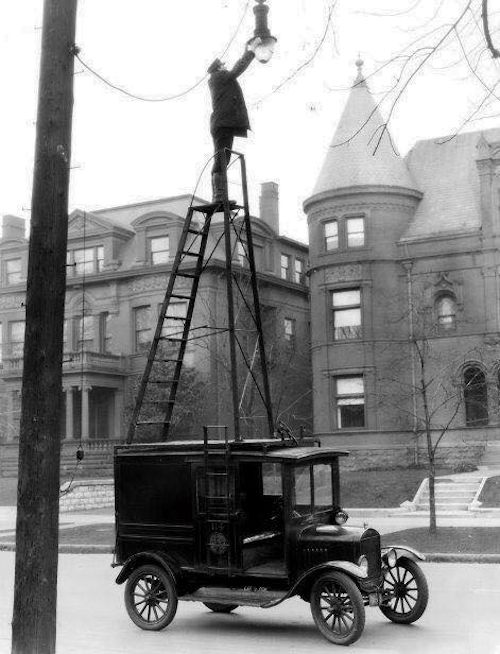
Pembroke was the first town in Canada to have electric power generated for commercial use and to install electric streetlights. On October 4. 1884 the very first electric street lights were illuminated along Pembroke Street beating many larger communities to the new innovation
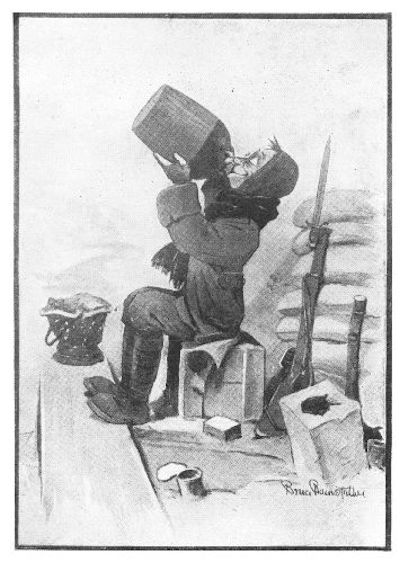
The spirit of our troops is excellent”, the legendary wartime cartoonist Bruce Bairnsfather on the soldiers’ appreciation of rum. Private soldiers did not have access to the rum ration which was normally under lock and key.
When WWI came along rum was perhaps the most preferred beverage among soldiers. The famous “gunfire” ration was reintroduced by the British as a warmer during the first winter in the trenches of 1914/1915 and was quickly adopted by the “Dominion” forces (Canadian, Australian, South African and New Zealand) too. A memorandum to the Canadian overseas minister, Sir Albert Kemp, noted: “It is left to the discretion of the commanding officer as to whether oxo, soup or rum is required. As a general proposition, preference is expressed for the latter. The individual man is in all cases free to refuse the issue of rum if he so desires, but this option is only exercised in a few instances.”
However the French seemed to prefer wine. At the beginning of the First World War the daily allowance of wine per man was a quarter of a litre a day, by 1915 it was half a litre and by 1916, almost three quarters of a litre with the opportunity to buy more.
The army was supplying its troops with 12 million hectolitres a year by 1916 – French vineyard owners from the Languedoc donated 20m litres for army use at the outbreak of the war and France’s North African colonies provided a great deal of wine by the end.
Wine never dies. Instead it lives in the soul of the person who consumes it.
Baron Philippe de RothschildStunning the wine world in 1994, Mission Hill Family Estate’s Grand Reserve Chardonnay 1992 won the Avery Trophy for “Best Chardonnay Worldwide” at the International Wine & Spirit Competition in London.
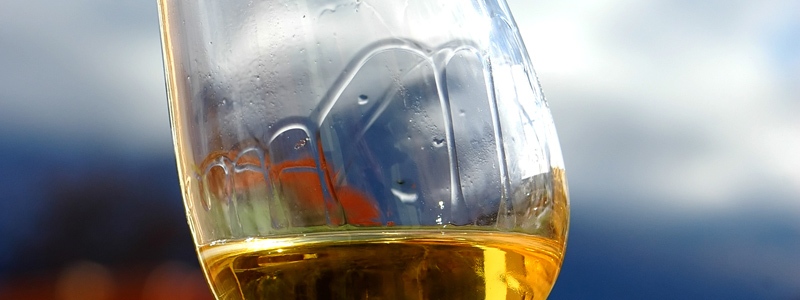
Wine legs, also referred to by the French as the “tears of a wine,” are the droplets or streaks of water that form on the inside of a wine glass as you move the wine around. While some people think these legs relate to the quality, sweetness or viscosity of the wine.
Some people refer to these droplets as church windows because of the long arch-like patterns they create on the sides of a glass. Others think of them as the crying tears of wine, and it's easy to see why with their tear-like shape.
Officially, the world’s highest vineyard is the ‘Pure Land & Super-High Altitude Vineyard’ in Cai Na Xiang, Qushui County of Lhasa, Tibet, and stands at 3563.31m above sea level.
Other contenders to the title had included the Altura Maxima vineyard in Argentina’s Salta province, owned by Bodegas Colomé, which is commonly regarded as the world’s highest vineyard.
Nicholas ( Grimshawe,In 1983, Grimshawe launched B.C. Wine Notes, the first independent newsletter dedicated exclusively to British Columbia wines. He also formed the first independent wine tasting club for British Columbia wines: fourteen people attended the inaugural meeting in May 1983. Born in Britain, the son of a nurseryman who emigrated to Canada in 1957, Grimshawe's wine interest was piqued while he trained as a chef in Ontario. When he tired of cooking for large groups, he moved to Vancouver in 1972 to become a freelance food and wine writer and subsequently discovered British Columbia wines. However, both the newsletter, which achieved a circulation of more than 300, and the wine society were premature and both closed at the end of 1984. Grimshawe went on to manage a store dedicated to British Columbia wines in The Hudson's Bay Co. main store in Vancouver until 1987 when the store was franchised to a group of estate wineries. Grimshawe then joined The Bay's staff as a departmental manager.
Albert Givton, (1945-2017): A Vancouver businessman and wine collector, Givton published The Wine Consumer, awell-produced but acerbic newsletter which appeared quarterly from the spring of 1985 to the winter of 1990. ''The ability to call 'a spade a spade' has always been our forte and although some disliked this aspect of The Wine Consumer, most respected us for that,'' Givton wrote in his editorial in the final issue.
Robb Dunfield, 1959-): This Vancouver-born artist's courageous career received significant impetus after Calona Wines began featuring his oil paintings on its premium wines in 1991. Dunfield paints all of his canvasses by manipulating the brush with his mouth because he is paralyzed below the neck, the result of a broken vertebrae suffered at age nineteen in a thirty-foot fall to the pavement from the balcony of an uncompleted building. An active athlete prior to the accident, Dunfield began painting during his rehabilitation to fill the time. "The days were long and boring," recalls Dunfield, who now also has become a motivational speaker. "The art work allowed me to get lost in my own little world and to express myself, the way I used to in sports. Then I had someone offer me money for one of my paintings. That's when I really started to enjoy it." He was already producing art for calendars and cards when Calona commissioned label art. "I was definitely struggling," he admits. "They opened a lot of doors for me. I was selling my paintings for substantially less than I am now."
The first wine distinguished with a Dunfield label was the winery's 1987 Rougeon Reserve, with an initial production run of three hundred cases priced at $10 a bottle. "I remember saying that Calona has never sold a bottle of wine over $10 in its entire history," recalled Ian Tostenson, who was just then taking over as president of Calona's parent company. The eye-catching labels depicting a British Columbia scene propelled the wine's success; Calona soon dared to price its top wines aggressively. The Dunfield labels, allied with label commentary by winemaker Howard Soon, were appearing by 1996 on all of Calona's flagship wines -- and they began to attract collectors. Dunfield's arduous technique limits his annual output of canvasses so that each print is likely to have a three-year life on a specific label before being replaced. The original canvasses, some of which have been acquired by Calona, are limited by Dunfield's reach to a maximum size of twenty inches by thirty inches. He paints in oils because water colors dry too quickly. For scenic inspiration, he augments limited trips to the outdoors with his vivid imagination and memories of his youth. Dunfield and Soon seek to match the label scenery with the character of the wines which Dunfield -- whose father was a keen home winemaker -- gets to taste. "I am more of a red wine drinker than a white wine drinker," the artist says.
Kvevri or Qvevri - also known as Tchuri in Western Georgia - are large earthenware vessels used for the fermentation, storage and ageing of traditional Georgian wine. Resembling large, egg-shaped amphorae without handles, they are either buried below ground or set into the floors of large wine cellars. Kvevris vary in size: volumes range from 20 litres to around 10,000; 800 is typical.
Archaeological excavations in the southern Georgian region of Kvemo Kartli (notably at Dangreuli Gora, Gadachrili Gora and in the village of Imiri) uncovered evidence of grape pips and kvevris dating back to the 6th millennium B.C.
General Information on Canada
The Provincial Parks of Nova Scotia
http://www.kanetix.ca/nova-scotia-provincial-parks
Visit Canada
http://www.cic.gc.ca/englisH/visit/index.asp
Tell us what you like or do not like about this website. We care!
As the cost of living continues to rise, the cost of maintaining this website has tripled in the last two years alone our non-profit website would welcome a little support!
A small donation would be greatly appreciated.