|

Icewine Harvest
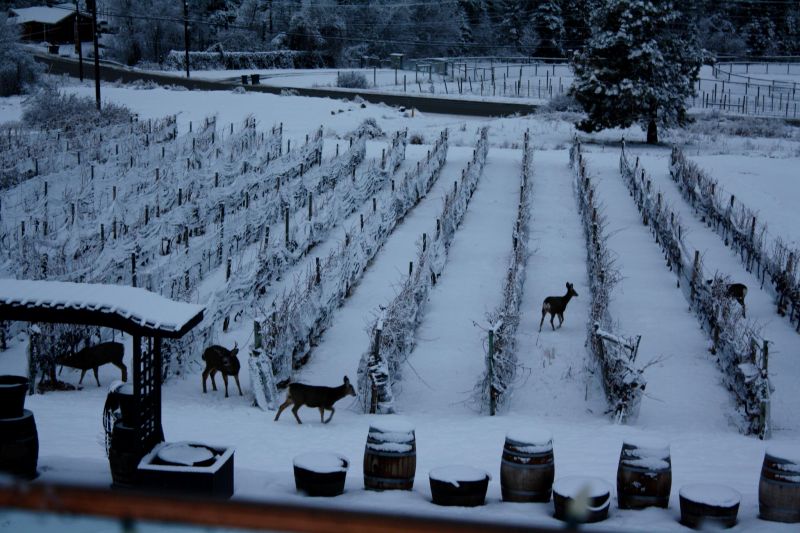
Waiting for the right temperatures leaves the grapes for the deer invasion.
One reason Icewine is so expensive. photo from Summerhill Pyramid Winery

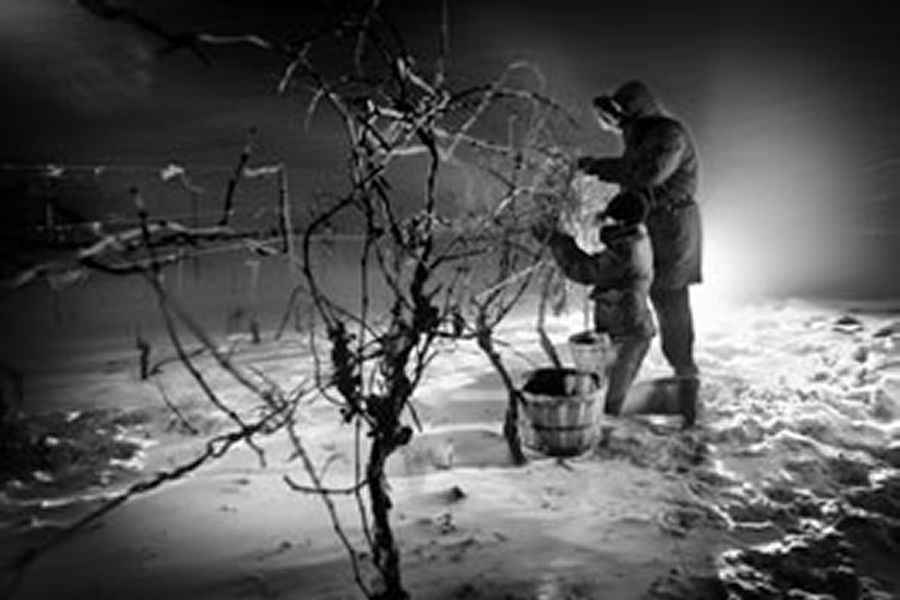
Harvesting the grapes for ICEWINE -Peller Estates Team
During Icewine season, wineries and grape growers keep a careful watch on the weather forecast looking for an optimum stretch of temperatures between -10 and -12 °C ( standards may vary from province to province). This temperature range will produce juice in the range of 35 to 39 ° Brix (roughly equivalent to the percent sugar in the juice). Typically, a period of at least 6 hours is needed to harvest and press the grapes – and it is usually an overnight job. Most small and medium sized wineries harvest by hand, often with volunteers who are enthusiastic Icewine lovers and want to experience the harvest first hand. Warm clothing is required. Mechanized harvesting has been developed very recently and is now an option for larger vineyards.
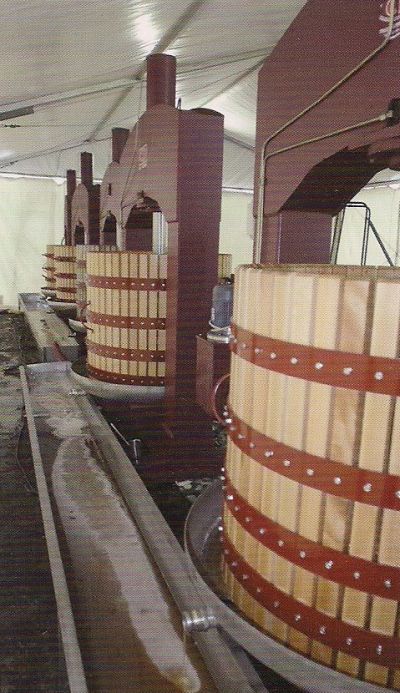
Once the grapes are harvested, they are pressed in small hydraulic presses under much higher pressure than normal for grapes harvested in the regular season. Because the grapes are frozen, most of the mass is water, and is left behind as ice in the press. Only a small amount of concentrated juice is extracted. Juice yields for Icewine grapes are much lower than for table wines – with average yields of 500 litres for each acre netted, or approximately 15% of the expected yield for grapes harvested for table wines. This reflects both the losses in grape volume from dehydration while the grapes hang and losses to hungry birds and other animals.
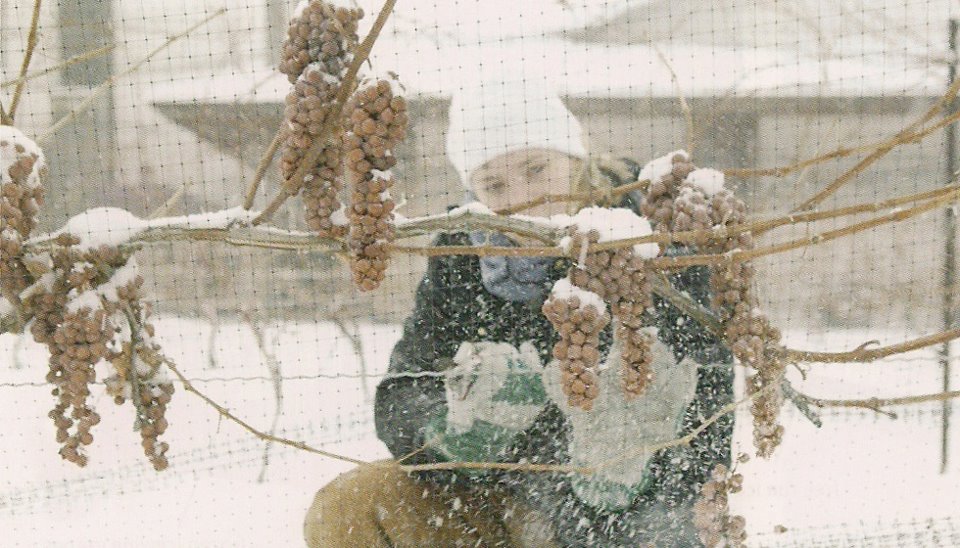 Harvesting Icewine ~ Equifera
Icewine juice is very sweet and can be difficult to ferment. High sugars can create a hostile environment for the yeast and fermentation stops early, leaving relatively low alcohol and high sugar levels in the finished wine.
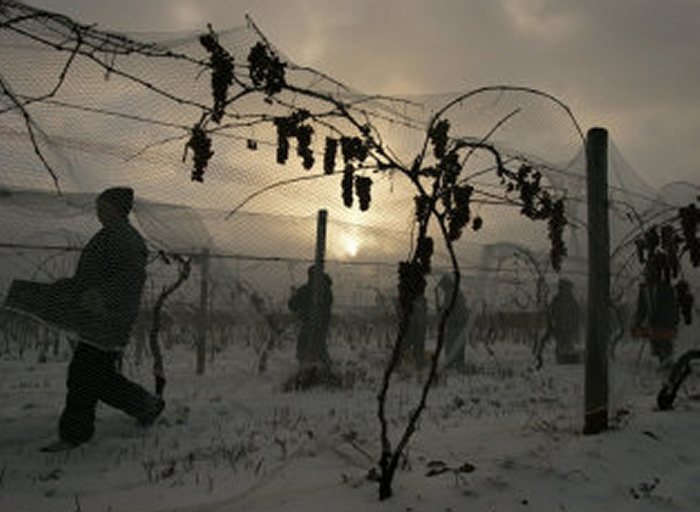
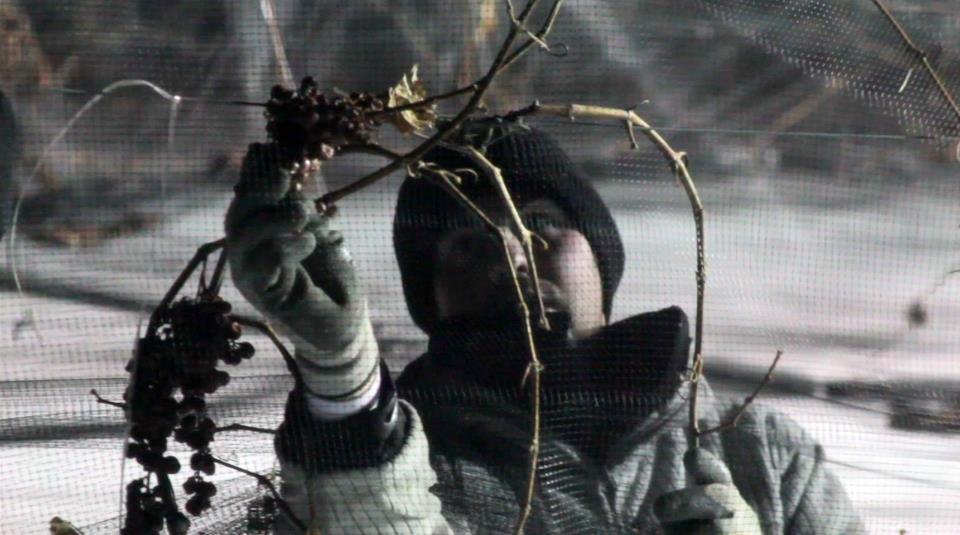
Its a cold night when the harvest begins all hands must answer the call.
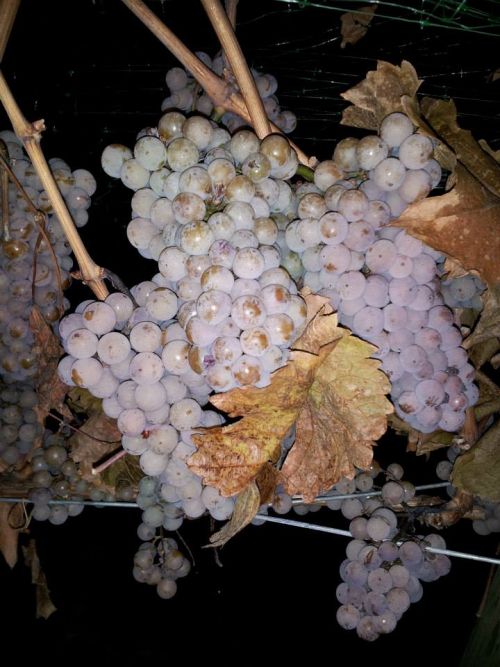
Ready to harvest Riesling - Quails Gate Winery
The major requirement of icewine is cold temperatures. In
order to harvest the grapes qualifying standards must be met in some
regions that is easier to be achieved than others. Canada is more suited to
producing icewine than for example, France. In Ontario weather conditions
in the Niagara peninsula are more suited to freezing temperatures than southern
Okanagan. When the standards are met and the call comes, the rush is on to
harvest and press the grapes. Icewine must be produced exclusively from grapes
that have been harvested, naturally frozen on the vine, and pressed in a continuous
process while the air temperature is -8° Celsius (17.6°F) or lower.
Icewine grapes are often harvested during the night to guarantee a temperature
below -8° Celsius. Its
an all hands on deck operation.
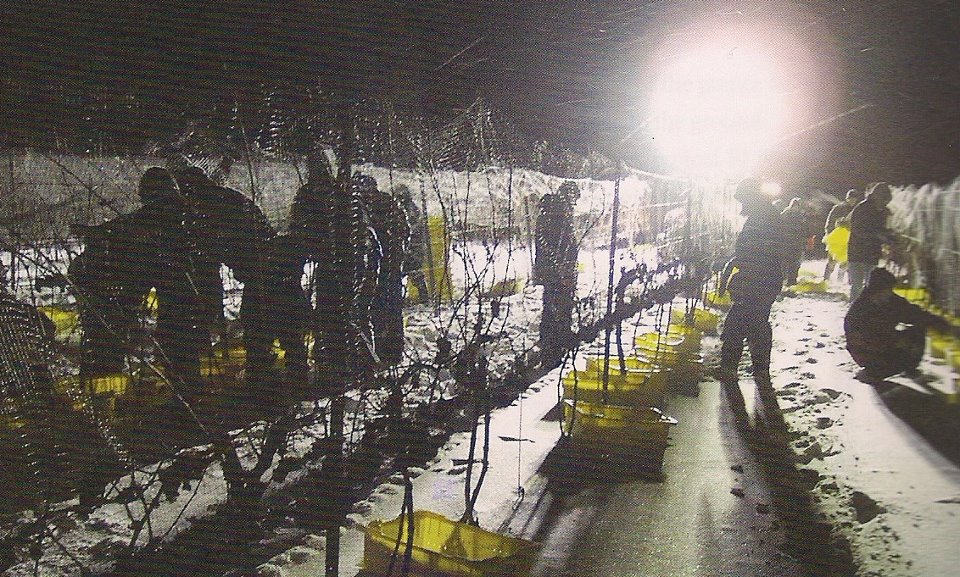
The wineries usually wait until it is -9° Celsius to -11° Celsius
( 16F -12F) Ideal parameters for pressing the juice are between 38°-42° Brix
juice yield around 159L per tonne for vidal and 125 L per tonne for riesling,
ideal titratedable acidity of 10-12 g/l tartic acid and PH between 3.1 and
3.3. Vineyards yield should be no more that 7 tonnes per acre for Vidal and
5 for Riesling. Riesling and Vidal are the most popular icewines in Ontario
The ideal or optimal harvest time is mid December to mid January.
Early freezing does not produce the highest quality juice. If the freeze comes
too late the grapes may be dehydrated. More complex flavours may occur if
the grapes are not picked until the second freeze, allowing for a freeze-thaw-freeze
cycle
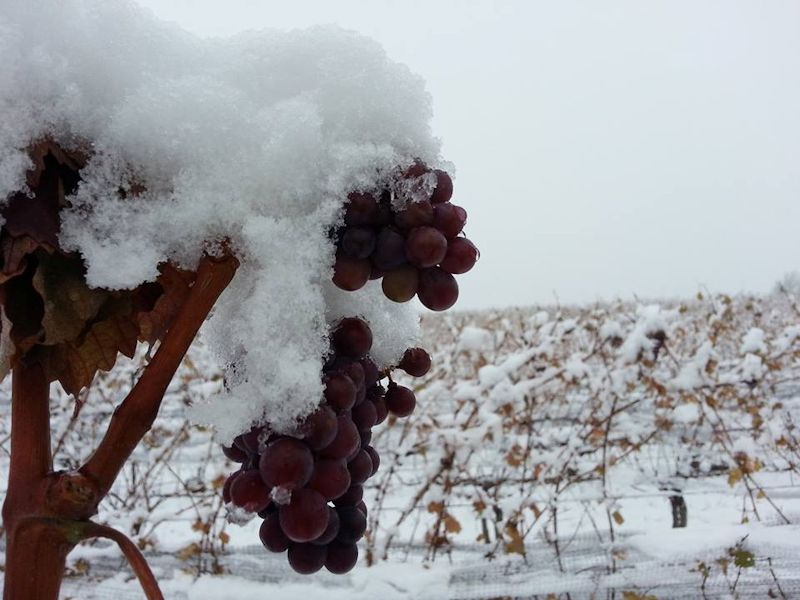
Temperature is not the only factor that may harm the icewine
harvest. Birds like to feed on the grapes. To protect the grapes devices are
used to scare off the birds including the use of propane cannons. Netting is
also used and is perhaps the best method.
Both Ontario and British Columbia icewine standards are by the
Vintners Quality Alliance - VQA - It is similar to other regulatory systems
in place in such countries as France (AOC), Italy (DOC), and Germany (QmP),
and ensures the consumer of high quality Canadian wine.
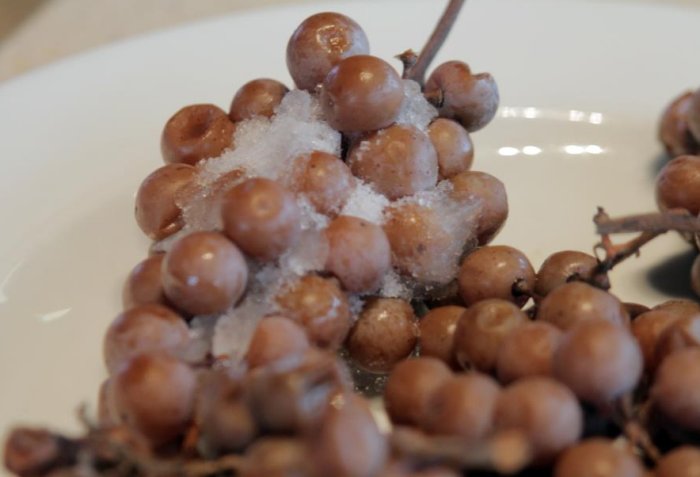
Photograph provided by Equifera Estate Winery
Machine Harvest vs Hand Harvest
Machine-Harvested Icewine grapes result in cleaner fruit with less debris which also gives harvested frozen grapes give a cleaner juice with lower insoluble particles.
Hand harvesting is the traditional way of gathering grapes for Icewine. This is very laboor-intensive and the harvest has more emotional connection to the product.
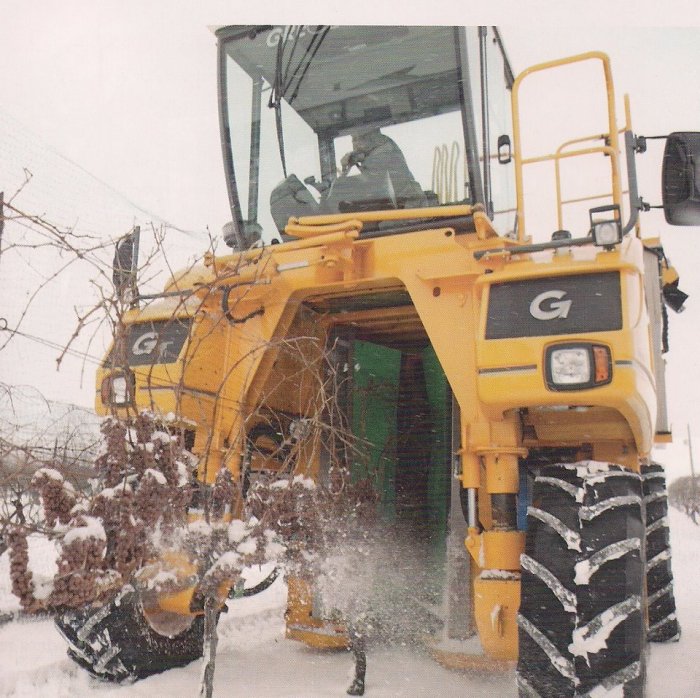
Mechanical harvesting of grapes illustrating vibration of the trellis to shake off grapes from vine.
Photo provided by Equifera Estate Winery
 |
Juice collected from the presses has the temperature of the grape at the time of pressing and can only have temperatures of -8°C (18°F) and -14°C (7°F). Since the juice, when collected, is cold, settling and clarification is very slow. In order to facilitate more a rapid settling, the juices are allowed to warm slightly as they are stored in the tanks.
information and image provided by Donald Ziraldo
|
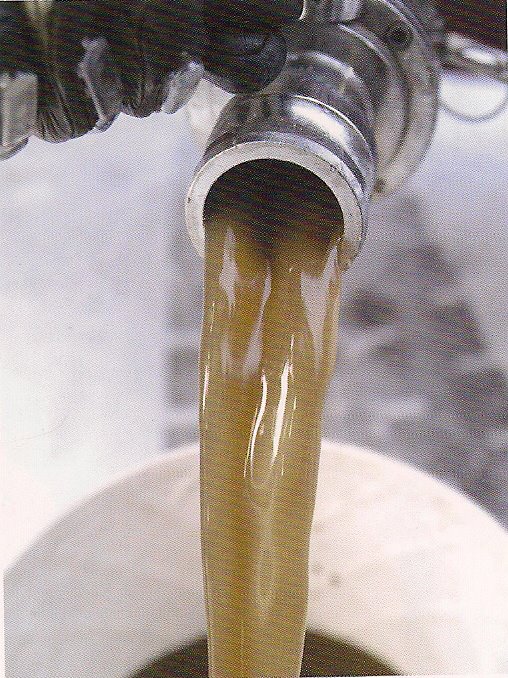 Freshly pressed grape juice producing icewine

In 1974, Donald Ziraldo co-founded the Inniskillin Winery, and was responsible for the development of Icewine in North America, as Canada rose to global prominence in the wine world with the win of the 1991 Grand Prix d'Honneur at Vin Expo.
British Columbia
Icewine must be made exclusively from British Columbia grown grapes, and from
authorized grape varieties. The grapes must be naturally frozen on the vine,
and processed while the air temperature is minus 8° Celsius or lower.
Artificial refrigeration of the grapes or the juice, the must,* or wine for
the purpose of increasing the must weight is prohibited at any point in the
production process except for temperature control during fermentation and cold
stabilization prior to bottling. *Must (from the Latin vinum
mustum, “young wine”) is freshly pressed fruit juice (usually grape juice) that contains
the skins, seeds, and stems of the fruit. The solid portion of the must
is called pomace; it typically makes up
7%–23% of the total weight of the must. Making must is the first
step in winemaking. Must is also used as a sweetener in a variety of cuisines.
The VQA Designated Vitiicultural Areas are: Okanagan Valley, Similkameen
Valley, Fraser Valley and Vancouver Island
Ontario
The VQA recognizes within Ontario three designated Viticultural Areas: Niagara
Peninsula, Pelee Island, and Lake Erie North Shore. A wine must meet or exceed
production and appellation standards before it can use specific geographic
designation on its' label.
Introduction ~ Making
Icewine~ The Harvest ~ History ~ Key
Producers ~ Icewine Standards
We do not sell or promote the import or export of icewines
~ Pictures of Donald Ziraldo and Equifera Estate Winery are the excusive property of the Winery and Mr Ziraldo.
Advertise on this page
Home | About |New Reports |Sitemap | Support | Contact
Us |©2020 Robert A Bell |